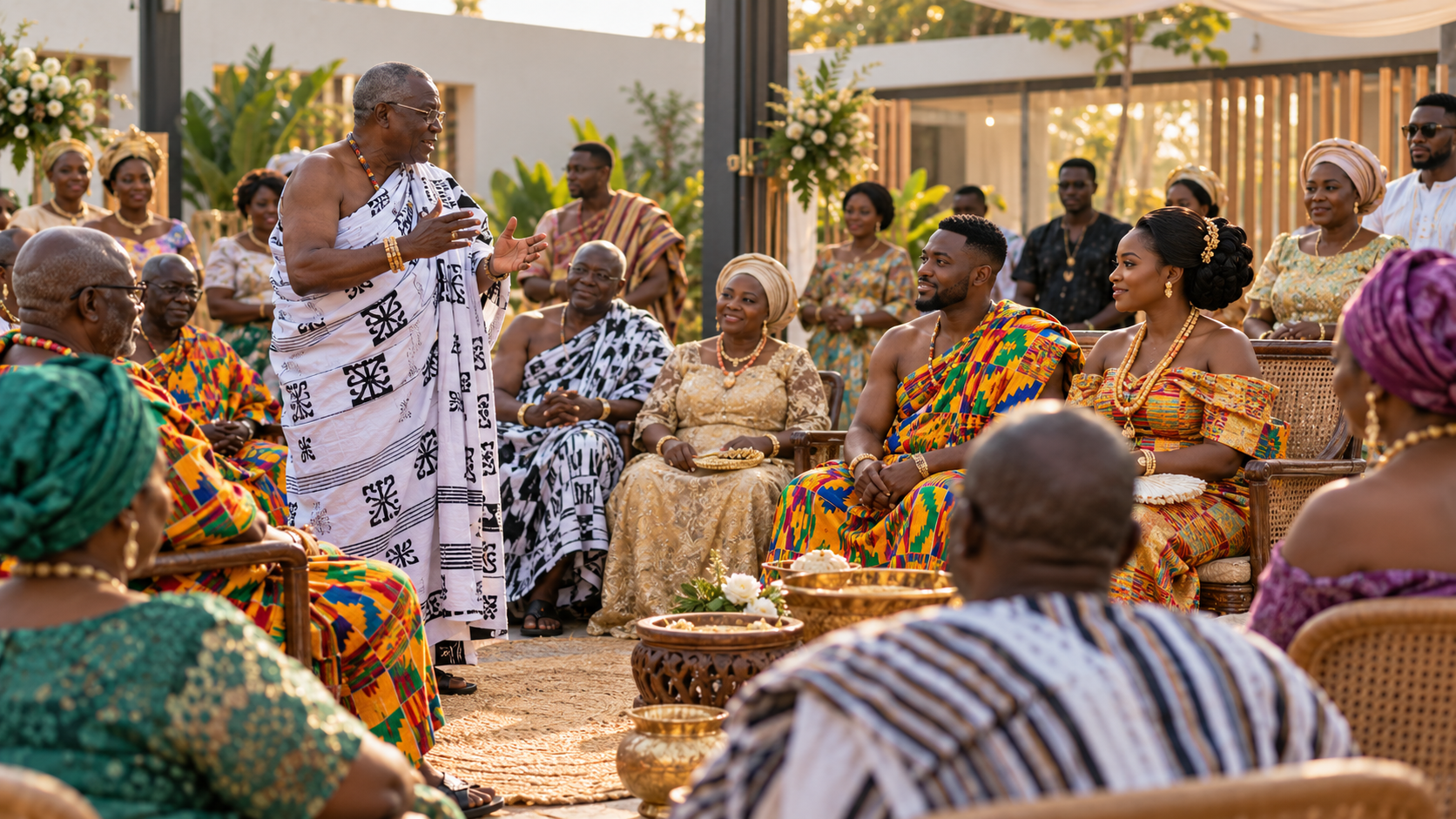
Ask ten Ghanaian families what a “traditional wedding” should look like and you may get ten slightly different answers. That is part of what makes the subject interesting.
There are shared themes, but marriage customs can differ by ethnic group, religion, family and region. This guide explains common ideas without pretending that one ceremony represents the whole country.
How do marriage traditions work in Ghana?
Customary marriage generally centres on an agreement recognised by the families and performed according to the applicable custom. The people, words, gifts and sequence depend on that custom.
Couples may also have a civil, ordinance, church or Islamic marriage process. These have distinct legal or religious requirements, so confirm them with the responsible authority.
Why does family involvement matter?
Marriage is often treated as a relationship between families as well as between two individuals. Representatives may introduce the purpose of a visit, negotiate arrangements, speak during the ceremony and witness the agreement.
The couple should still understand what is being agreed. Family involvement works best when it supports clear consent and communication.
What is knocking?
Knocking commonly describes a formal introduction or declaration of intention from one family to another. Drinks or gifts may be presented, and family representatives may speak.
The timing varies. Some families hold knocking well before the customary marriage; others combine stages. Ask what the process means in the two families involved.
What happens after knocking?
Families may agree on a date, provide a marriage list, discuss responsibilities and identify representatives. Religious or legal preparations may happen alongside these steps.
Do not book an expensive celebration before the essential family and date conversations are settled.
What is the traditional marriage list?
It is a family-specific list of customary items, gifts or practical requirements. It may include drinks, clothing, jewellery, money with a symbolic purpose, scripture or gifts for relatives.
There is no single Ghanaian list. The guide to bride price in Ghana explains why online averages and copied lists can mislead couples.
How does bridewealth work?
Bridewealth can form part of the customary recognition of the marriage. Its form and meaning depend on the tradition. It should not be described as buying a bride.
Ask the family representatives to explain which item represents bridewealth and how it differs from gifts or event expenses.
What happens during the customary marriage ceremony?
A ceremony may include introductions, statements of purpose, presentation and checking of agreed items, consent, advice, prayers, recognition of the marriage and hospitality. The order and participants vary.
The couple and organisers should confirm who needs a seat, who speaks, which items must be ready and how long the formal part may take.
What is the role of spokespersons?
Family spokespersons help manage the formal exchange. A good representative understands the custom, communicates clearly and avoids turning the occasion into a performance that embarrasses either family.
Couples should brief representatives about sensitive issues and know which decisions require their involvement.
Traditional clothing and kente
Kente and other traditional textiles are popular, but clothing choices differ by community, family and personal preference. Ask whether there is a family colour, cloth or dress expectation before ordering outfits.
Plan changing time and assistance if the couple will wear more than one look.
Food, hospitality, music and dancing
Hospitality can be an important part of receiving both families, but the scale is a choice. A home gathering may need catering, chairs and shade; a larger venue celebration may add decor, sound, an MC and rentals.
Build these as event costs, not as proof that the marriage is more valid. Browse Ghanaian event providers only after the family plan and guest estimate are clear.
How does religion shape the ceremony?
Prayer, scripture, an imam, pastor or other religious leader may be involved depending on the families. Some requirements belong to a separate religious ceremony rather than the customary marriage itself.
Confirm current requirements directly with the appropriate religious body.
Traditional marriage versus ordinance marriage
These terms do not describe the same legal process. A customary marriage follows the applicable custom, while an ordinance marriage follows statutory procedures. Registration and documentation questions should be confirmed with the relevant assembly, registry or qualified legal adviser.
This article provides planning context, not legal advice.
Can couples have both a traditional and white wedding?
Many do, while others choose only one ceremony. Families, faith, legal choices, time and money all influence the decision. If you hold several events, create a separate guest list, schedule and cost plan for each one.
How are traditions changing?
Families may shorten ceremonies, combine stages, use smaller gatherings, include both partners more directly or coordinate arrangements across countries. Change does not happen in the same way everywhere.
Diaspora couples should nominate trusted local contacts, use video meetings where appropriate and confirm which decisions must happen in person.
Questions to ask before planning the ceremony
- Which family or community tradition applies?
- Is knocking separate from the customary marriage?
- Who are the representatives and speakers?
- What items have been agreed, and what does each mean?
- How many guests will each family invite?
- Which religious or legal process is separate?
- Who manages food, seating, clothing and the programme?
Once those answers are clear, use the complete guide to planning a wedding in Ghana to turn the family agreement into a workable event plan.