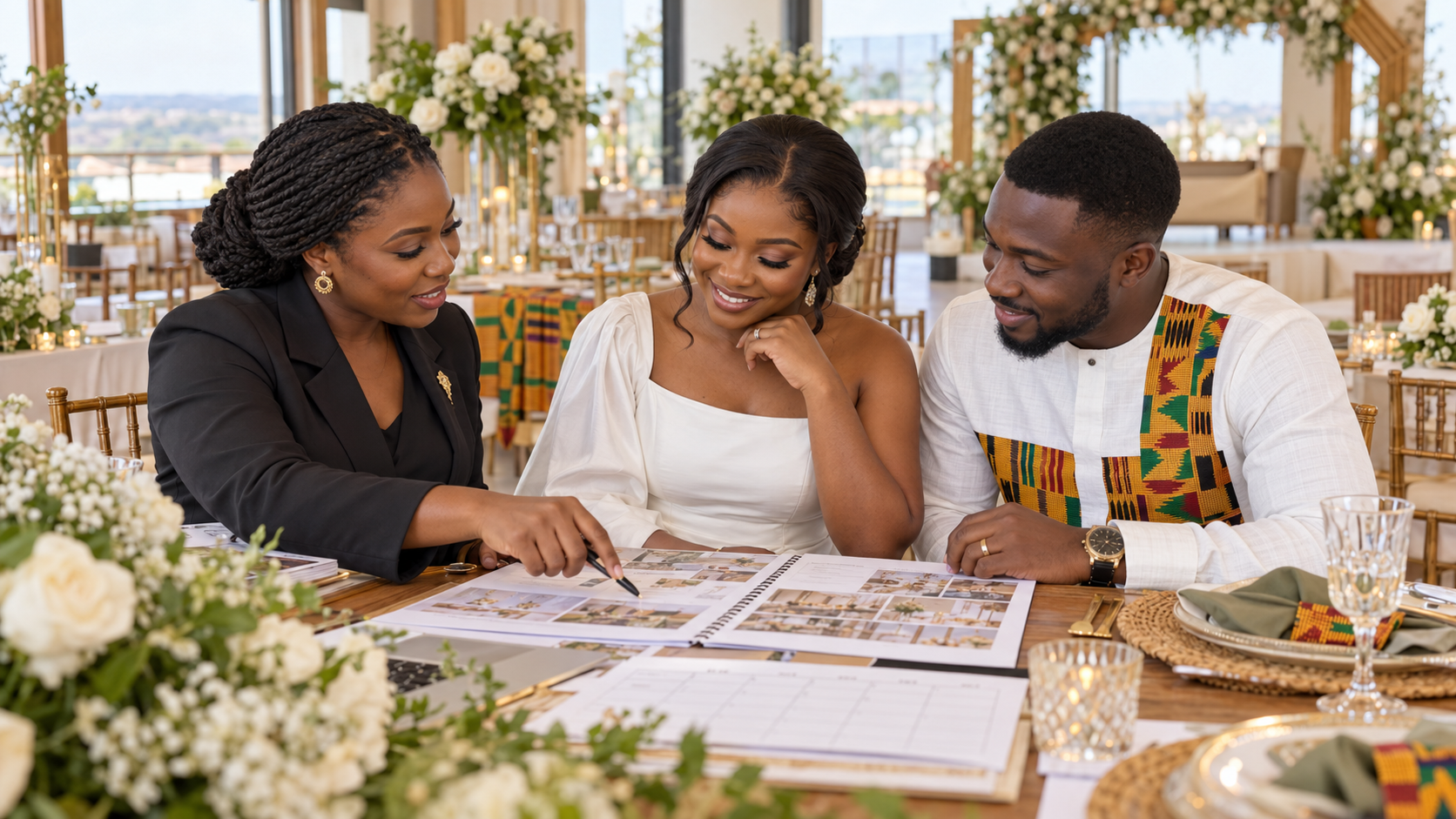
You can spend three weeks discussing colours and still have no confirmed guest count, no working budget and no idea who is making the final decisions. That is how wedding planning becomes busy without actually moving forward.
The quickest way to make progress is to plan in the right order. Start with the people, ceremonies, money and date. Those choices shape the venue and suppliers; the decorative details come later.
How do you plan a wedding in Ghana?
Begin by agreeing on the kind of marriage and celebration you are planning, who needs to be involved, how many guests you can realistically host and what you can afford without depending on uncertain promises.
Many couples combine customary rites with a church, civil or ordinance ceremony and a reception. Others choose one ceremony or a smaller family gathering. There is no compulsory format. The plan should fit your legal requirements, faith, family customs and finances.
Decide what you are actually planning
Write down each event that may take place: knocking, customary marriage, church service, civil ceremony, reception, thanksgiving or another family gathering. For every event, note the likely date, location, guest count and person responsible.
This prevents one phrase—“the wedding”—from hiding several separate budgets and schedules.
Bring the right people into the first conversation
Decide who can approve spending, confirm family requirements and speak to suppliers. A large group chat is not a decision-making system. Give specific people clear roles and record decisions after each meeting.
Ask both families which customs matter to them rather than assuming every Ghanaian marriage follows the same list. Our guide to Ghanaian marriage traditions explains why family and community differences matter.
Build a budget before choosing a venue
There is no single correct wedding total. Guest count, location, catering, venue, decor, clothing, photography and the number of ceremonies can change the budget considerably.
Create three columns: essential, important and optional. Then estimate each service separately and keep a contingency for changes. Read how much a wedding in Ghana can cost before comparing written quotes.
Do not treat family contributions as available money until the amount and timing are confirmed. If you need to discuss who is contributing, use our guide to who pays for a wedding in Ghana as a starting point.
Create a guest list you can actually manage
Start with named guests rather than a round number. Separate the list by family or social group, remove duplicates and decide whether invitations include partners or children.
Your guest count affects catering, seating, rentals, washrooms, parking and the size of venue you need. Set a date after which additions require a budget decision, not just another name on the list.
Choose dates with the full plan in mind
Check important family, church, registry and travel dates. If relatives are travelling from abroad, decide how much notice they need. Consider rain, heat, traffic and competing events in the area.
If you are registering the marriage, confirm current requirements directly with the responsible registry or assembly. Do not rely on an old social post or another couple's document list.
Shortlist a venue that works, not just one that photographs well
The venue must fit your usable seating layout, programme, supplier access and weather plan. Ask what the hire price includes, when decorators and caterers may enter, what power backup exists and how late the programme may run.
Use the wedding venue booking guide and compare venues on EventsKonnectGH before paying a deposit.
Book suppliers in a sensible order
Start with professionals whose availability affects the rest of the plan: the venue, planner or coordinator, caterer, photographer and any specialist whose schedule fills early. Your exact order will depend on the wedding.
Send every shortlisted supplier the same useful brief: date, location, guest count, working hours, required service and important constraints. Compare deliverables, people, equipment, transport, setup, payment dates and cancellation terms—not only the total.
You can explore event service providers and use the platform to start enquiries with professionals whose services fit the plan.
Plan the customary marriage with both families
Ask what process each family expects, who will speak, what items are requested and which arrangements are open to discussion. Bridewealth, knocking gifts and celebration costs are different things, even when people mention them in the same conversation.
If you have been given one national figure, pause. Read what families should know about bride price in Ghana and confirm the actual family expectations privately.
Turn the wedding day into a workable programme
Write a timeline that includes supplier arrival, setup, dressing, photographs, travel, guest arrival, ceremonies, meals, speeches, entertainment and pack-down. Leave space for movement and delays.
Give the final programme to the venue and key suppliers. Name one person who can answer practical questions on the day so the couple is not approving chair positions or chasing delivery vehicles.
Confirm every important agreement in writing
Keep the quote, scope, payment record and changes together. The final agreement should identify the supplier, date, location, deliverables, team size, arrival time, equipment, payment schedule and cancellation terms.
If a supplier promises an extra hour, different item or special access arrangement, ask for it to be added to the written agreement.
What should you check in the final month?
- Confirm the final guest count and meal numbers.
- Walk through the venue with the coordinator and relevant suppliers.
- Confirm balances, receipts and who is authorised to approve extras.
- Share contact names, arrival times and loading instructions.
- Prepare a rain, power and transport backup where needed.
- Pack documents, clothing and ceremony items using one written checklist.
Frequently asked questions
How long does it take to plan a wedding in Ghana?
There is no standard duration. A small ceremony with available suppliers may take far less time than a multi-day celebration with many guests. Begin once you understand the ceremonies, budget and likely date, then check actual supplier availability.
What vendors do you need?
Only book services your event requires. Common choices include a venue, caterer, planner or coordinator, photographer, decorator, rental provider, MC, DJ, makeup artist and transport. A church or family venue may already provide some items.
What should you book first?
Book the decisions that constrain everything else. That usually means the date and venue, followed by high-priority suppliers with limited availability. Do not pay merely because somebody creates urgency; check the scope and terms first.
How do you keep families involved without losing control of the budget?
Agree who decides, who contributes and how changes are approved. Share the budget regularly, but require a practical solution whenever somebody asks to add guests, ceremonies or services.