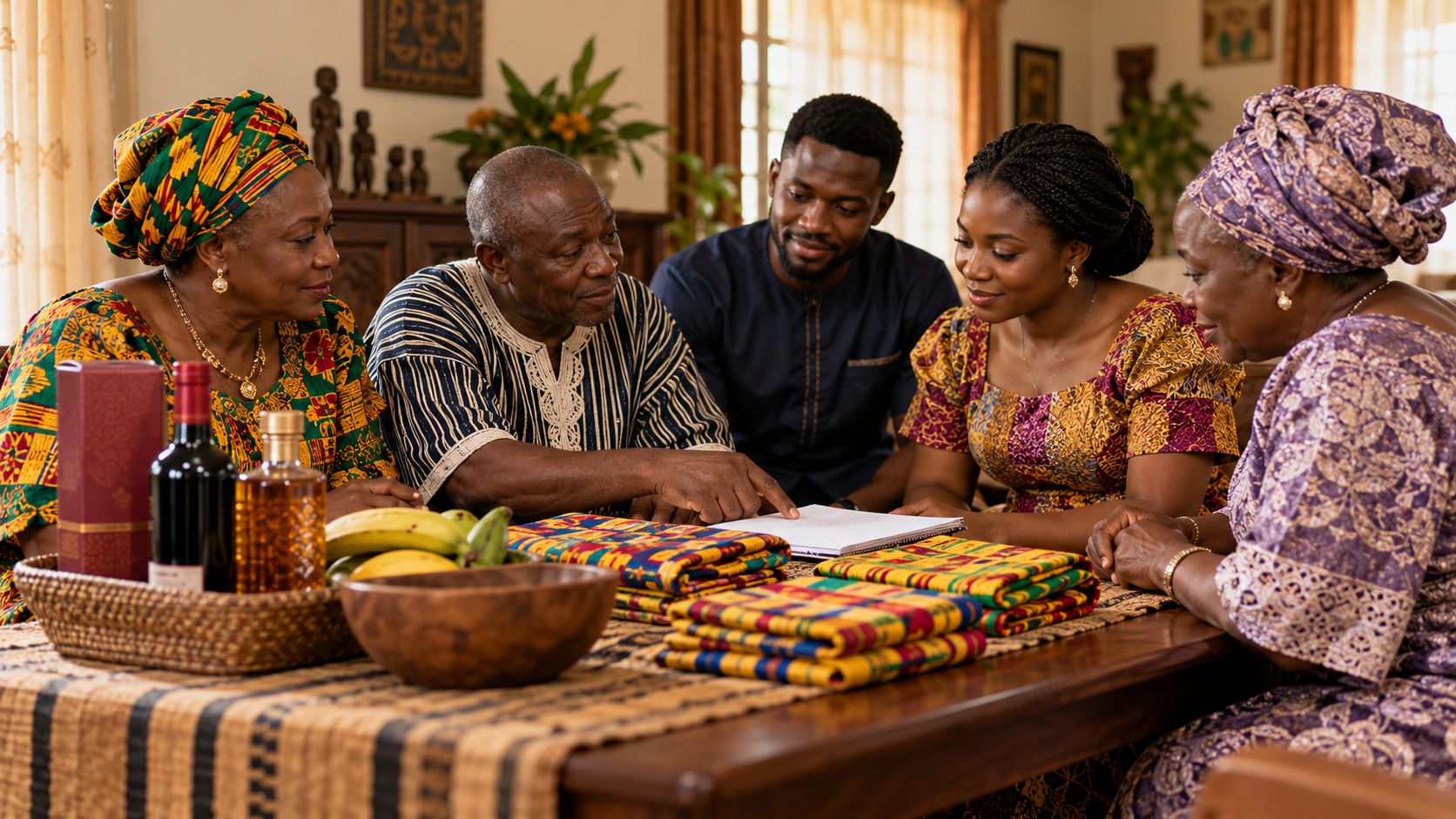
If someone gives you one figure and tells you that is “the bride price in Ghana”, be careful. There is no universal Ghanaian price list.
The amount and items requested can depend on the family's customs, ethnic tradition, religion and the discussions between both families. The respectful way to budget is to ask the actual families involved.
What does bride price mean in Ghana?
Bride price, more accurately described in many contexts as bridewealth, refers to money or symbolic items presented as part of a customary marriage process. Its meaning is connected to family recognition and the marriage relationship; it is not a purchase of a woman.
The words people use can differ. Ask family elders or representatives what a term means in their own process.
Is there a standard bride price in Ghana?
No. Ghana includes many communities and family traditions, and individual families may follow, adapt or combine practices differently. Religion, location and diaspora experience can also influence arrangements.
EventsKonnectGH has not collected a reliable national dataset on bridewealth, so this article does not publish a fictional average.
Why does bride price differ between families?
Family custom, ethnic tradition, the purpose of each item and discussions between representatives can all affect the list. Two families from the same ethnic community may not request identical things.
That is why a list copied online is useful only as a conversation prompt, not as the list for your marriage.
Bride price versus knocking
Knocking is commonly used to describe an introductory family process in which one family formally states the intention to marry. Depending on the families, drinks, gifts or money may be involved.
Knocking may happen separately from the customary marriage, on the same day or in a form shaped by the families' own practice. Do not assume the timing or items.
Bride price versus the traditional marriage list
A marriage list may include several types of item: symbolic bridewealth, drinks, clothing, gifts for particular relatives, rings, scripture or other family and religious requirements.
People sometimes call the entire list “bride price”, but that can blur important differences. Ask which items have customary meaning, which are gifts and which are practical costs for the gathering.
What items can appear on a marriage list?
Depending on the family and tradition, a list may mention drinks, cloth or clothing, jewellery, scripture, money with a symbolic purpose and gifts for specific family members. This is not a universal checklist.
Ask for each item to be explained. Understanding its purpose is better than treating the list like a shopping order.
Does the groom have to provide everything on the list?
That depends on the family conversation and the meaning of the items. If something is difficult, unclear or no longer practical, raise it respectfully through the appropriate representatives rather than silently ignoring it.
Can families negotiate the marriage list?
Many families discuss timing, substitutions and practical concerns, but how that conversation happens depends on the people involved. Choose a respectful representative who understands both the custom and the couple's situation.
Negotiation should not become humiliation. The aim is a clear, dignified agreement between families.
How do customs differ?
Among some Akan families
You may hear terms such as knocking and tiri nsa, with drinks and family representatives playing defined roles. The exact list and sequence still differ among families.
Among some Ga families
Family introductions, drinks, gifts and customary items may form part of the process, but there is no single Ga list that every household follows.
Among some Ewe families
The families may agree on presentations and responsibilities according to their locality and family tradition. Ask which relatives take formal roles.
Among Krobo families
Marriage arrangements can reflect Krobo family customs alongside religious or modern preferences. Do not confuse separate cultural ceremonies with a universal marriage requirement.
In northern Ghanaian communities
Practices vary across Mole-Dagbani and other northern communities, with different family, religious and community expectations. One description cannot represent them all.
How can religion affect marriage traditions?
Christian, Muslim and traditional religious practices may shape ceremonies, documentation, clothing and family expectations. Some couples combine elements; others keep processes separate.
Ask religious leaders about current requirements while allowing family representatives to explain customary expectations.
Does bride price include the cost of the ceremony?
Not automatically. Customary items, food for guests, chairs, decor, clothing, photography and transport should be listed separately. A family may combine discussions, but the costs serve different purposes.
Read how much a wedding in Ghana can cost for the celebration budget, and keep that worksheet separate from the family list.
Questions to ask both families
- Which tradition or family process are we following?
- What is the purpose of each requested item?
- Is knocking separate from the customary marriage?
- Who will act as each family's representative?
- Which items or arrangements can be discussed?
- What belongs to the rites, and what belongs to hosting the celebration?
- Which legal or religious steps are separate?
Clear answers protect the relationship between families and give the couple a budget based on their real situation rather than an internet average.